
It Starts With a Bigger Problem Than a Simple Clog
A full sewer line replacement isn’t something that happens from a minor plumbing issue. In most cases, it starts when a homeowner is dealing with a problem that keeps coming back or won’t clear at all.
Often, the first step is a drain cleaning service being called out to clear a blockage. In some situations, that works temporarily. But when the problem keeps returning—or the line simply won’t open up at all—that’s usually a sign something deeper is going on inside the sewer system.
At that point, it stops being a basic clog issue and becomes a diagnostic situation. The goal shifts from clearing the line to understanding why it’s failing in the first place.
Camera Inspection Reveals What’s Really Going On
Once it becomes clear that a simple cleaning isn’t solving the issue, a sewer camera inspection is typically used to take a closer look inside the line.
This step is critical because it removes guesswork. Instead of assuming what might be wrong, the camera shows the actual condition of the pipe in real time.
During an inspection, it’s common to find issues such as broken pipe sections, collapsed areas, heavy root intrusion, or outdated materials that are no longer structurally sound. In older homes, it may also reveal materials like clay or other legacy piping that has deteriorated over time.
Once the condition of the line is fully understood, the decision can be made whether a repair is realistic or if full replacement is the better long-term solution.
Planning the Work Before Any Digging Begins
If replacement is needed, the next stage is planning the job properly before any physical work starts.
This step is often overlooked by homeowners because it happens behind the scenes, but it’s one of the most important parts of the entire process.
Before digging begins, utilities in the area must be located. This ensures that gas, electric, water, and other underground lines are identified and avoided during excavation.
At the same time, the proper permits are obtained. Sewer work is regulated, and permits ensure the project meets local requirements and is completed safely and correctly.
This preparation stage is what allows the actual work to move forward without unexpected issues once excavation begins.
Excavation and Removal of the Old Sewer Line
Once everything is approved and marked, the physical work begins with excavation.
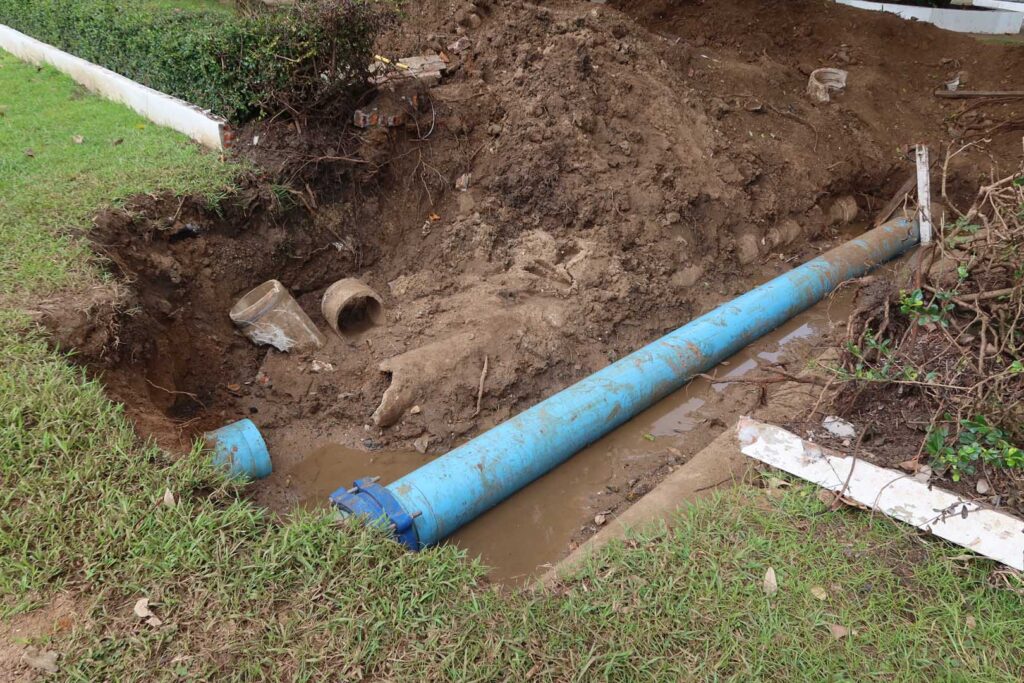
This is the stage most people picture when they think of sewer replacement—digging into the yard or affected area to expose the existing pipe.
The old sewer line is carefully uncovered and removed as needed. In many cases, the condition of the pipe makes it clear why the system was failing. Older materials may be cracked, collapsed, or completely blocked by roots or debris.
Depending on the layout of the property, the excavation may run from the house connection point all the way to the city main. The goal is to fully replace the section of line that is no longer functioning properly so the system can operate as intended again.
This part of the process can vary in complexity depending on depth, soil conditions, and how accessible the line is.
Installing the New Sewer Line
Once the old line is removed and the path is prepared, the new sewer line is installed.
Modern materials—typically PVC—are used because they are far more durable and reliable than older piping systems. The new pipe is laid out and carefully connected along the same route as the original system, or a modified route if needed based on conditions found during excavation.
The installation has to be done with precision so that the proper slope and flow are maintained. Sewer systems rely on gravity, so even small errors in grading can affect how well the system functions.
This stage is about more than just replacing pipe—it’s about restoring proper flow and ensuring the system will continue working long-term without recurring issues.
Reconnecting to the System and Testing Flow
After the new line is installed, it is connected back into the home’s plumbing system on one end and the city connection on the other.
Once everything is tied in, the system is tested to make sure wastewater is flowing properly through the new line.
This step is important because it confirms that the issue has been fully resolved and that there are no additional blockages, leaks, or connection problems.
Only after the system is confirmed to be working correctly is the job considered complete.
Why Sewer Replacement Is a Structured Process
Sewer line replacement is not random or improvised work. It follows a structured process for a reason.
Each step builds on the one before it—starting with diagnosis, moving into planning, then excavation, installation, and final testing. Skipping or rushing any of these steps can lead to incomplete repairs or future failures.
The reason the process is so methodical is simple: sewer systems are essential to the entire home. If something goes wrong, it affects everything from toilets to sinks to showers.
Because of that, the work has to be done in a way that fully resolves the underlying issue rather than just addressing symptoms.
Understanding What’s Actually Happening Underground
For most homeowners, sewer replacement is unfamiliar territory. The process happens below ground, so it’s not always clear what is involved until it’s explained step by step.
What often surprises people is how much of the work happens before and after the digging itself. The inspection, permitting, and testing phases are just as important as the physical replacement.
By the time the job is complete, the goal is not just to install a new pipe, it’s to restore a fully functional sewer system that won’t continue causing problems in the future.