
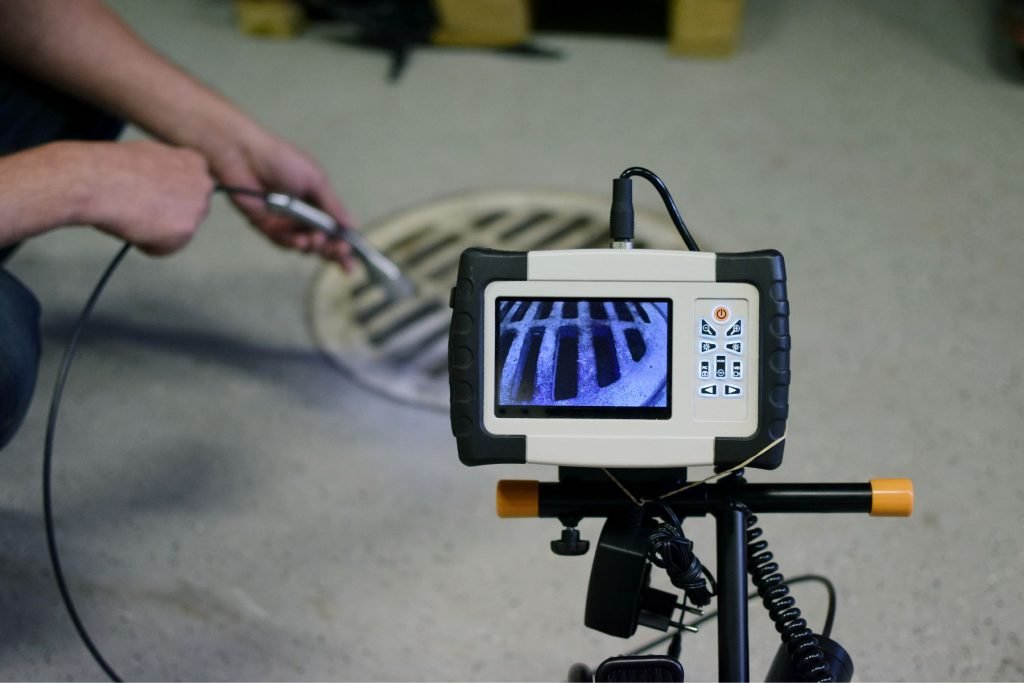
A sewer camera inspection is one of the most effective ways to see what’s happening inside a sewer line without digging anything up. A small, waterproof camera is fed through the pipe so the inside condition can be viewed in real time.
It’s commonly used when there are recurring backups, slow drains, or when a drain cleaning attempt doesn’t fully resolve the issue. But the goal of the inspection isn’t automatically to confirm a repair—it’s to understand the actual condition of the line.
In many cases, what people assume is happening underground turns out to be very different once the camera is inside the pipe.
When the Camera Confirms a Clear Problem
There are situations where the inspection shows exactly what was expected. The pipe may be broken, collapsed, or heavily damaged. In older neighborhoods, it’s also common to find outdated materials like clay or other aging pipe types that have deteriorated over time.
In these cases, the camera doesn’t just confirm a problem—it helps define how serious it is and where it’s located. That information is important because it determines whether a section can be repaired or whether a full replacement is the more realistic option.
When the damage is widespread or the material itself is failing, the inspection often leads directly to a recommendation for replacement rather than short-term fixes.
When the Inspection Shows Less Damage Than Expected
Not every camera inspection results in a major repair recommendation. Sometimes the condition of the line is better than the homeowner originally thought.
There are cases where repeated backups or slow drains lead someone to assume the worst, but the camera shows a line that is still intact and functioning. In some situations, the issue may be more localized or even unrelated to a full sewer line failure.
Occasionally, the inspection reveals that the sewer line has already been replaced at some point in the past. This can happen in homes that have changed ownership or been through renovations where prior work wasn’t fully documented.
For investment properties or flip homes, this is especially common. A problem is suspected based on symptoms, but the actual infrastructure may already be newer than expected.
Why Camera Inspections Don’t Automatically Lead to Repairs
A sewer camera inspection is not a sales tool—it’s a diagnostic tool. That means the result depends entirely on what is found underground.
Some inspections lead to clear next steps like replacement or repair. Others lead to the conclusion that no immediate work is needed at all. In both cases, the value of the inspection is in removing guesswork.
Sewer systems are hidden, so symptoms like backups or slow drains don’t always tell the full story. The camera helps separate perception from reality.
That’s why two homes with similar symptoms can end up with completely different outcomes after an inspection. One may need major work, while the other may only need minor adjustments or no action at all.
Why Clear Information Matters More Than Assumptions
One of the biggest challenges with sewer issues is that people often have to make decisions without seeing the problem directly. That leads to assumptions based on symptoms, age of the home, or past experiences.
A camera inspection replaces those assumptions with visual confirmation. It shows whether the pipe is damaged, blocked, deteriorating, or still in good condition.
That clarity matters because sewer repairs and replacements are significant decisions. Having accurate information first helps avoid unnecessary work and ensures that when action is taken, it’s based on what is actually happening underground.
What Homeowners Often Learn From the Process
In many cases, the most valuable outcome of a sewer camera inspection is simply understanding the system better. Homeowners often discover that issues are not as severe as they feared, or on the other hand, that a problem has been developing longer than expected.
Either way, the inspection creates a clear starting point. From there, decisions can be made with confidence instead of uncertainty.
What it doesn’t do is automatically point to a single outcome every time. The result depends entirely on the condition of the line itself, which is exactly why the inspection is done in the first place.